
Article
Company vehicles in Luxembourg: extension of the tax benefit for 100% electric vehicles until 31 December 2030
Date of publication : 13.08.26
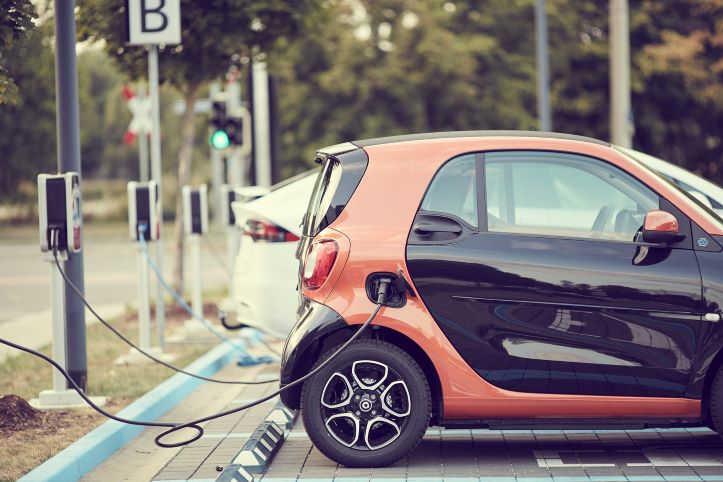
On 24 July 2026, the Government Council approved a draft Grand-Ducal Regulation (RGD) amending the rules governing the taxation of company cars in Luxembourg.
The main aim of the draft is clear: to extend the favourable tax regime applicable to 100% electric company cars. Whilst a rise in tax rates was initially expected from 1 January 2027, the draft ultimately provides for the reduced rates to remain in place until 31 December 2030.
The draft also introduces a new specific rate for certain plug-in hybrid vehicles.
Key points
- 100% electric company cars would remain subject to a rate of 0.5 per cent or 0.6 per cent until 31 December 2030.
- From 1 January 2027, plug-in hybrids emitting up to 50 g/km of CO₂ would be subject to a rate of 1%.
- Internal combustion engine vehicles would remain subject to a rate of 2%.
- At this stage, the legislation has not yet come into force.
What changes are planned for 100% electric company cars?
The draft Grand Ducal regulation provides for the reduced rates used to calculate the monthly value of the benefit in kind for 100% electric company cars to be maintained for a further four years.
Rates maintained until 31 December 2030
Depending on the vehicle’s electricity consumption, the rate would remain set at 0.5% or 0.6%.
This extension represents a significant change from the regime that was originally due to apply.
What was previously planned
Prior to this draft legislation, it was planned that, from 1 January 2027, the rates applicable to 100% electric vehicles would rise to 1% or 1.2%.
In other words, the draft legislation postpones this increase and extends the tax benefit for employers and employees using an electric company car in Luxembourg.
What will be the applicable rate for plug-in hybrids from 2027?
The draft legislation introduces a new provision for plug-in hybrid electric vehicles.
New rate for certain plug-in hybrids
From 1 January 2027, plug-in hybrid vehicles with CO₂ emissions of 50 g/km or less would be subject to a rate of 1%.
This clarification is important, as it sets out the tax treatment of this category of vehicle in relation to the benefit in kind for company cars.
What are the rules for internal combustion engine vehicles?
For internal combustion engine vehicles, the draft does not announce any changes in this regard.
The rate used to calculate the monthly value of the benefit in kind would remain set at 2%.
The rules for internal combustion engine vehicles therefore remain unchanged.
What would happen after 31 December 2030?
The draft also confirms what is expected to apply after 31 December 2030.
For 100% electric vehicles, the rates would then rise to 1% or 1.2%.
For plug-in hybrids emitting up to 50 g/km of CO₂, the applicable rate would rise to 1.5%.
This deadline is important for companies wishing to plan their vehicle fleet policy and the future tax costs of vehicles made available to employees.
Summary table of rates for benefits in kind
| Vehicle type | Period | Applicable rate |
|---|---|---|
| 100% electric vehicle | Until 31/12/2030 | 0.5% or 0.6% |
| 100% electric vehicle | À From 01/01/2031 | 1% or 1.2% |
| Plug-in hybrid ≤ 50 g/km of CO₂ | From 1 January 2027 to 31 December 2030 | 1% |
| Plug-in hybrid ≤ 50 g/km of CO₂ | From 1 January 2031 | 1.5% |
| Internal combustion engine vehicle | Rates unchanged | 2% |
Why is this development important for employers and employees?
This development is particularly significant for:
- companies that finance or provide company cars;
- employees who benefit from a company car;
- HR, tax, payroll and fleet management managers;
- groups considering the electrification of their fleet in Luxembourg.
In practice, maintaining a reduced rate until 2030 makes 100% electric vehicles more attractive compared with internal combustion engine vehicles and, to a certain extent, compared with plug-in hybrids.
Is the text already in force?
No.
At present, this is a draft Grand-Ducal regulation approved by the Government Council on 24 July 2026.
It is therefore advisable to exercise caution: the text has not yet come into force. Until the final text has been adopted and published, it is preferable to refer to planned or proposed measures, rather than to rules that are definitively applicable.
Also worth keeping an eye on: subsidies for the purchase of zero-emission vehicles
Meanwhile, another bill relating to the subsidy scheme for the purchase of road vehicles with zero CO₂ emissions is also before a parliamentary committee.
This bill aims to extend government subsidies for the purchase of CO₂-free vehicles, notably the €6,000 or €3,000 grants for 100% electric cars, depending on their electricity consumption.
These developments could usefully complement the tax regime applicable to company cars.
Conclusion
The bill approved on 24 July 2026 marks a significant change to the taxation of company cars in Luxembourg. It provides for the extension until 31 December 2030 of the favourable tax regime for 100% electric vehicles, introduces a 1% rate for certain plug-in hybrids from 2027, and maintains the 2% rate for internal combustion engine vehicles.
For both companies and employees, these measures could have a tangible impact on decisions relating to mobility, remuneration and fleet management.
About the author

Céline Petrini
Legal expert
Céline is a legal adviser in the employment department of the Windhof branch. She advises employers based in Luxembourg on employment law, with particular expertise in the cross-border context characteristic of the Grand Duchy.

Share this article


Did you like this article? Do you have a question? Leave a comment